


For years, the go-to insulation material for new buildings has been fiberglass batt insulation, but many homeowners are now opting to turn to more efficient insulators that can hold up better over time. It's worth investing in better insulation if your HVAC system is overworked and you want a more comfortable home. You will save money on HVAC repairs and keep your home cozy all year round by updating your new insulation.
Your average attic insulation cost will depend on the size of your attic space and the type of insulation you choose. However, your monthly energy savings will cover this expense. Usually, you can save 15-20 percent on your energy bill with good pitched or flat roof insulation, and quality insulation can last for decades before it needs to be replaced. During a regular roof inspection, a roofing specialist will check the current insulation and let you know when it's time to consider adding more insulation. When insulating attic roof areas, they will also help you get a better understanding of how much it normally costs.
It's best to consult a roofing specialist when selecting the right kind of insulation for your house. The decision will all factor in your budget, the weather in your area, and your particular space and roofing material.
Some of the types of insulation that are more common include:
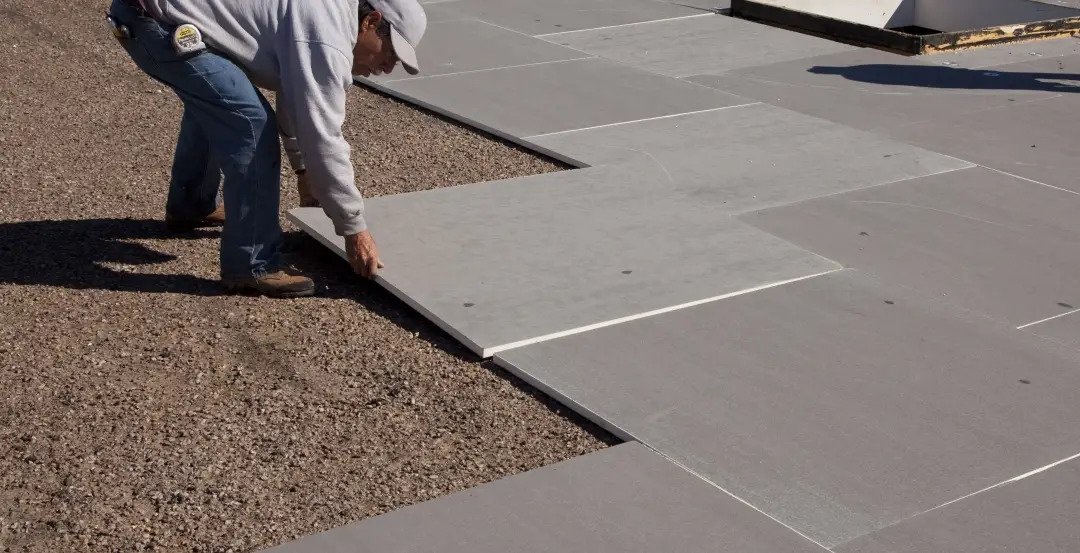
The cost per square foot of rigid foam insulation is a little lower, but it is not as effective at closing holes. However, for additional safety, it can be mounted below rafter boards. For the best combination of price and efficiency, many homeowners opt to use spray foam across the gaps. It would be important to cut and carefully place rigid foam, making it a more labor-intensive option that takes longer to install. Rigid foam insulation per square foot will cost as little as 45 cents.
Spray roof insulation foam is a common choice of insulation because it offers an outstanding barrier to air and moisture, and it will remain in place until it is healed without moving or dropping. It is easy to install this type of insulation, but it's pricier, and it can be a messy task. Spray foam requires protective gear to avoid inhalation and keep it from scratching the skin. It can also be mounted only when the temperature is warm enough to allow it to heal.
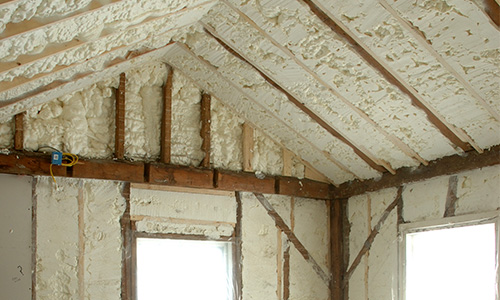
Spray foam is more expensive than other options, and per square foot, you can expect to pay anywhere from 65 cents to $1.50. This will depend on whether you pick a spray foam that is a closed cell or an open cell. A roofing specialist will help you assess the right spray foam for your needs.
As well as providing some protection against heat loss in the winter, a radiant barrier will absorb excess heat in your attic and save your cooling system energy. This form of insulation is a worthwhile investment. When paired with conventional insulation for year-round savings, radiant barriers perform best. For materials for this insulation form, you can expect to pay up to 30 cents per square foot of the attic room.
Cellulose isolation is usually made from recycled paper and wood, unlike conventional fiberglass batt insulation, and it is a common choice because it is one of the most environmentally friendly options. Blown-in cellulose insulation is also commonly used because, when properly mounted, it can mitigate fire damage. There is practically no oxygen in it, so it can become very compact, which can hinder the spread of flames. For your materials, you can expect to pay about $1.40 per square foot, but it will depend on the R-value) or your content. Some individuals will need to choose a more allergen-friendly material, as reactions can be caused by paper dust.
When it comes to your home's energy savings, the insulation material is just part of the picture. The roofing material also influences the indoor temperature of your house. As a metal roof is much better at reflecting heat and insulation against cold than an asphalt roof, the expense of metal roof construction can be seen to be worth the investment.
Also Read : Signs It's Time To Replace Your Roof
A flat roof usually has membrane insulation, and it would also need different methods than pitched roofs to install additional insulation. We have the expertise and skills to guide you through the right insulation for your budget and room because we know that the cost of building a metal roof can be daunting. The first time, we will also ensure that it is fully assembled so you can save money on supplies.
We guarantee our price and timeline once we have quoted you, so you know exactly when to expect us and how much for your insulation service you will have to pay. To set up a free estimate, contact us today to find out more about how we can help you stay happy in your home.

Related Articles:
Things to Do While Waiting for an Emergency Roof Repair?
 Roofing
Best practices state that your roof should be tested and checked twice a year, usually in the spring and fall. How much you need a complete inspection depends on what's made of your roof.
 Roofing
So a leak has come out of your roof! What would you do while waiting for roofing maintenance to make repairs to stop the flow of water? Here are easy fixes that will help avoid water damage to the roof deck and to the interior of your house, but not permanent.
 solar energy
Roofing
Solar panel
solar energy
Roofing
Solar panel
If you're searching for ways to reduce business expenses, then looking for ways to save energy is one of the best places to start. There are several basic hacks you can incorporate for energy savings that will reduce your energy costs.
 Roofing
Types of Metal Roofings, Advantages, and Disadvantages Metal roofs are all made of recycled materials that are identical but vary in shapes, sizes, and thicknesses. It's important to weigh the advantages and disadvantages of each type to find out which metal roof is right for you.